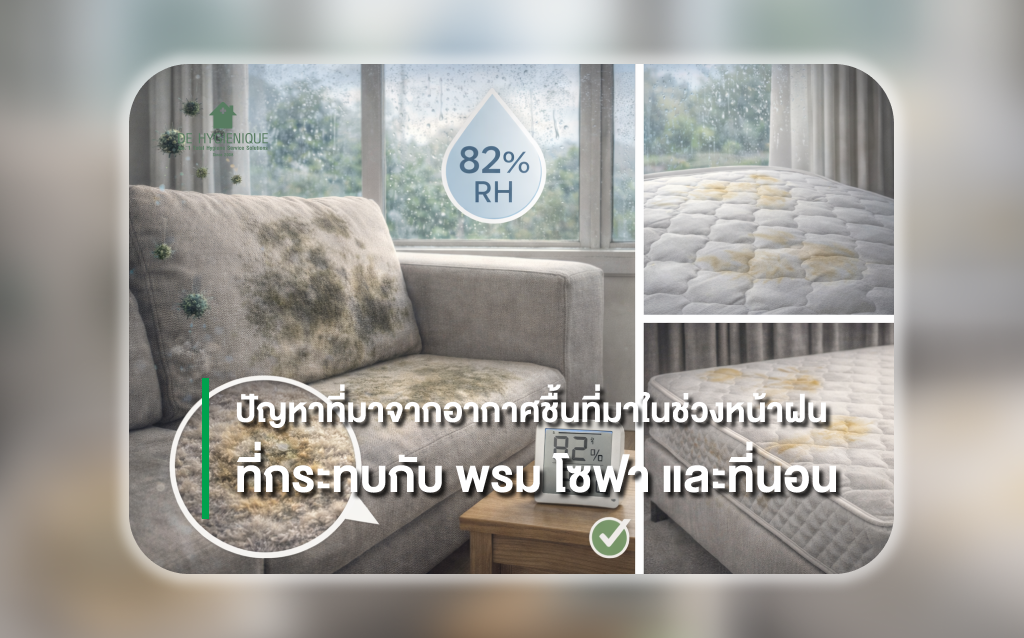
The humid weather during the rainy season increases the relative humidity inside homes. Fibrous surfaces like carpets, sofas, and mattresses easily absorb water vapor, leading to musty odors, mold, dust mites, yellowing/water stains, and triggering allergies such as coughing, sneezing, nasal congestion, and rashes, as well as reducing sleep quality.
Why does humidity cause problems for fabric furniture?
- Fungi grow rapidly when humidity is above 60%, and mold and spores can easily spread to carpets and upholstery.
- Dust mites multiply, and moist fibers provide an excellent food source (skin flakes, animal hair, fine dust).
- Slow evaporation, water stains, or rain splashes can prevent clothes from drying properly, leading to stains and deep-seated odors.
- In damp conditions, odors, sweat, pet hair, and organic matter can easily accumulate and cling to fibers.
Specific problem areas: Carpets / Sofas / Mattresses / Rugs
- Black spots/stains from mold appear, there’s a strong musty smell, and the vacuum won’t pick up the dust.
- The carpet edges/rug underlay may swell or become sticky.
Sofa (fabric/microfiber/linen)
- Water stains, yellowing marks, and a persistent musty odor occur.
- Coarse fibers and seams are breeding grounds for dust mites.
Mattress
- Damp stains, mold spots (especially under sheets), and musty odors after sleeping for long periods.
- Decreased sleep quality, shallow sleep, waking up with nasal congestion/itchy eyes.
Warning signs that should not be ignored.
- There was a musty/damp smell as soon as I entered the room.
- You may find “black/green spots” on fabric, carpet, behind pillows, or under the mattress.
- Waking up with more frequent sneezing/nasal congestion/itchy skin, especially after a rainy night.
- The surface becomes sticky or dries unusually slowly after cleaning.
“24-Hour Crisis Recovery Plan” after getting wet/splashed by rain.
- Absorbs moisture immediately. Use a microfiber cloth to wipe, do not rub in a circular motion (to prevent stains from spreading).
- Accelerate ventilation. Open windows/use a ventilation fan, turn on the air conditioner in Dry mode, or use a dehumidifier.
- Vacuum cleaner with narrow nozzle + HEPA filter. To remove as much dust/spores as possible clinging to the fabric fibers.
- High-risk areas for stains. Use a damp cloth to wipe it from the edges towards the center, then air dry.
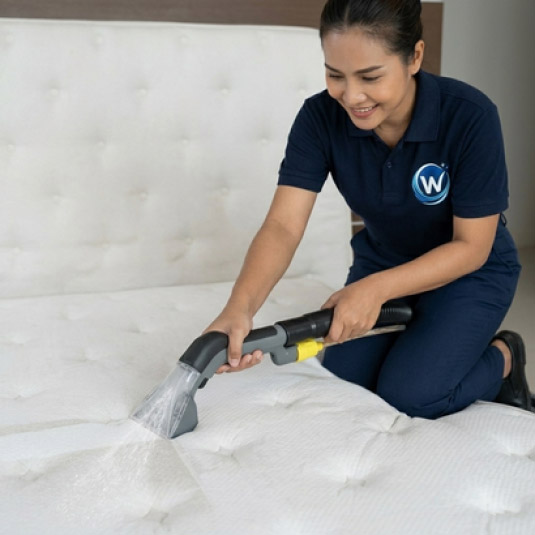
- If there are circular mold spots – and they smell strong. We recommend deep cleaning (steam cleaning/stain extraction/sterilization).
Long-term protection during the rainy season.
- Maintain humidity at 45–55%. Using a dehumidifier or the air conditioner’s Dry mode.
- Schedule your carpets, sofas, and mattresses to be vacuumed at least 2-3 times a week. With HEPA
- Wash bed sheets and pillowcases in warm water (~60°C). (If the fabric allows) Every 1–2 weeks.
- Dust mite-proof cover For mattresses and pillows, reduce exposure to allergens.
- Leave a gap between the furniture and the wall/floor. Allows for air circulation; dries quickly.
- Reduce moisture content. For example, hanging clothes to dry in the bedroom, or placing damp potted plants next to the bed/sofa.
- Choose materials that trap less dust.: Short-pile carpets, leather sofa covers or removable, washable covers, tightly woven fabric.
Care schedule during the rainy season.
- Weekly: Vacuum with a HEPA filter 2-3 times / Change bed sheets and pillowcases / Check for stains in high-risk areas.
- Monthly: Clean out dusty collectibles (stuffed toys, thick blankets) / Check the room’s humidity.
- Every 3–4 months: Deep cleaning of carpets, sofas, and mattresses (drying/stain extraction/disinfection) to reduce mold, ingrained dust mites, and musty odors.
Things to avoid
- Air freshener sprays mask odors without addressing the root cause, “humidity.”
- Using too much water on carpets/sofas and not drying them quickly.
- Allowing stains/black spots to spread—the slower you wait, the deeper they become embedded.
Summarize
The humid weather during the rainy season is a major enemy of carpets, sofas, and mattresses, accelerating the growth of mold, dust mites, stains, and musty odors. Effective management involves controlling humidity, ventilating, regular cleaning, and thorough deep cleaning at regular intervals. This will result in a clean, odor-free home with improved sleep quality and reduced health risks for everyone in the household.